The Age of Convergence
The world is changing. What will you help it become?
Awaken. Create. Transform.
The headlines tell us what happened. This trilogy asks what is happening to the world—and what we can do about it.
From America’s crisis of assumptions to the possibilities of Civilization 2050, Walter L. Christman connects the struggle to understand our age with the work of building a more just, peaceful, and resilient future. Across three volumes, the reader moves from seeing differently to acting with others—and discovering what meaningful change demands.
Publication planned for 2027 through the LEADS Institute, a subsidiary of Global Challenges Forum – USA, Inc..
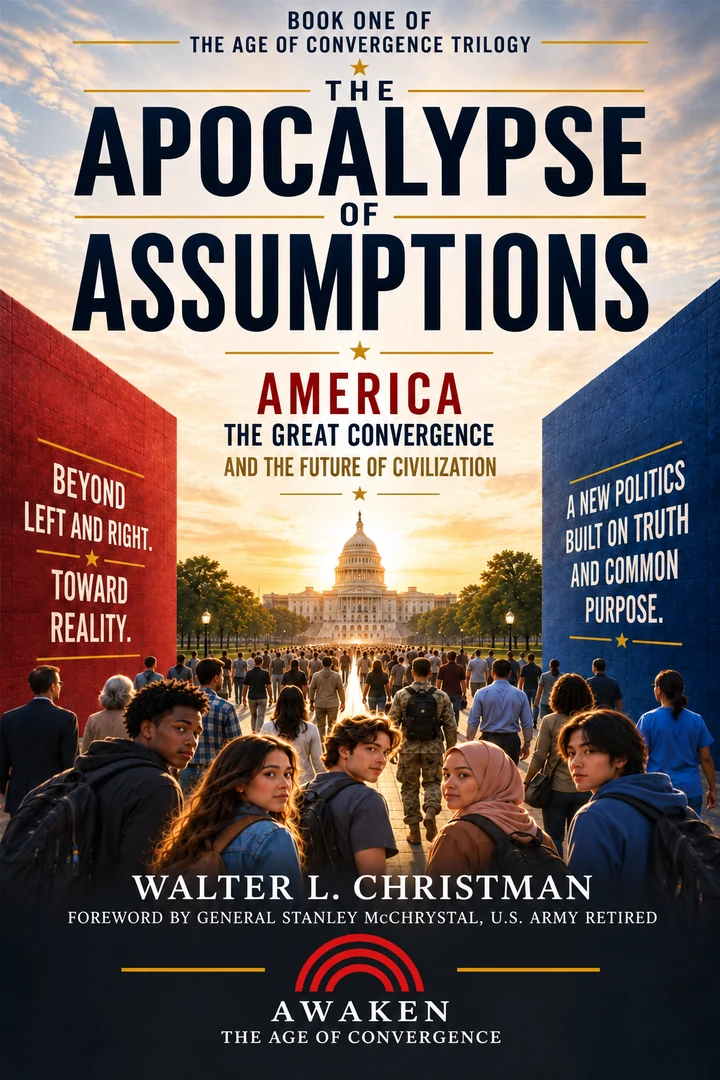
The Apocalypse of Assumptions
America, the Great Convergence, and the Future of Civilization
Why do familiar answers keep failing?
Elections change leaders. Technology expands our power. Yet the feeling that something deeper has gone wrong persists. What are we missing?
Christman asks what happens when reality outgrows the assumptions a civilization uses to understand itself. The word apocalypse becomes an invitation to revelation: to see what habit, loyalty, and power have concealed.
Through America’s political upheaval and searching encounters with history, faith, law, and moral responsibility, he follows a path from revelation through reckoning to renewal. The stakes are personal as well as political: what must we learn to see before we can choose wisely?
See the present with fresh eyes.
Discover the ideas of descriptive order and historical lag, explore the Great Convergence reshaping our lives, and encounter four First Principles for a future still open to human choice. Written against the upheavals of 2026, this is a book to carry into the decisions of 2028—and far beyond them.
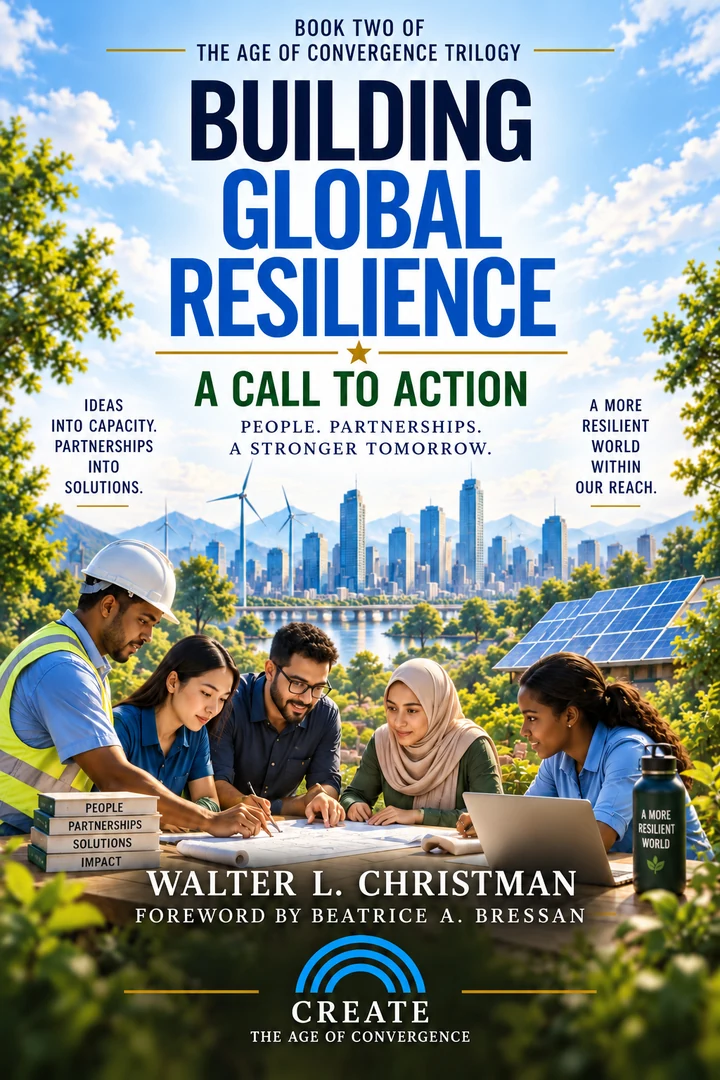
Building Global Resilience
A Call to Action
What could we achieve together?
Recognizing a crisis creates a harder question: how do we build the capacity to respond? Especially when the people who need one another see the world differently.
Building Global Resilience explores how knowledge becomes shared understanding, how trust makes cooperation possible, and how learning through action can turn scattered capabilities into something people can use.
Its horizon reaches beyond 2030 toward Civilization 2050. Increasingly powerful AI opens possibilities for discovery, learning, and human flourishing. Anson Burlingame’s example inspires a proposed U.S.–China partnership grounded in the equality of people and nations—and in responsibilities shared with all humankind.
Imagine a future we can sustain.
Global resilience becomes the enduring goal of sustainable development: the capacity to protect what matters, adapt when conditions change, and keep human flourishing possible. This volume invites you into the relationships and practical work through which that ambition could take form.
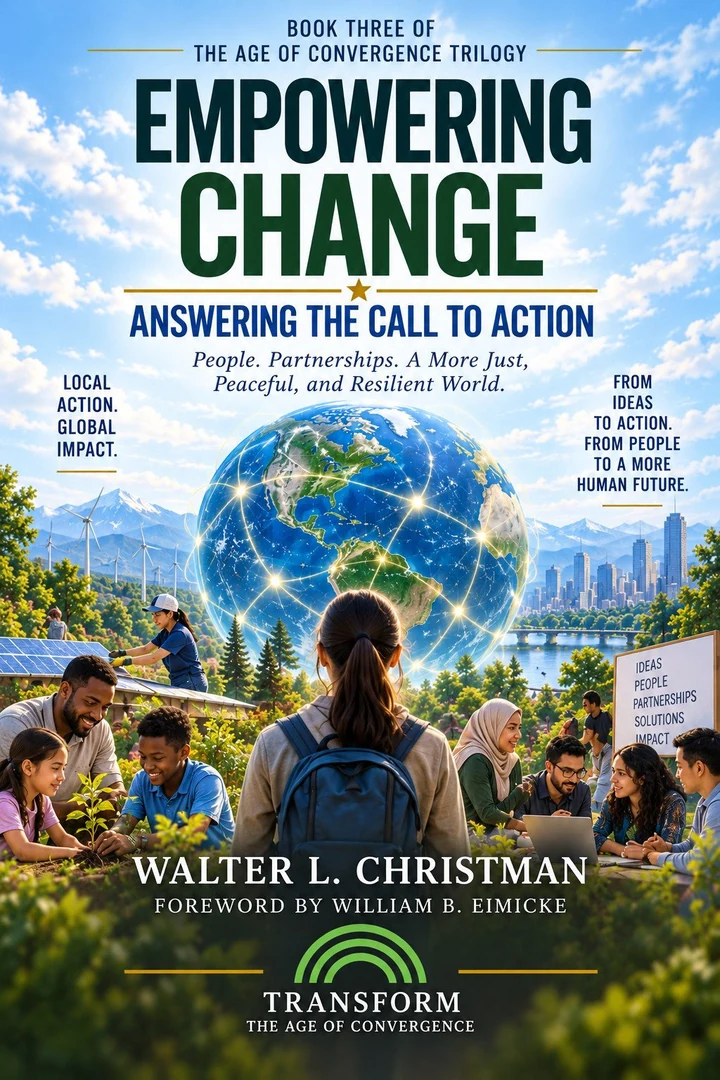
Empowering Change
Answering the Call to Action
What can people do now?
A project can meet every target and leave people with little more power over their lives. How would we know? What would a more demanding measure of success reveal?
Empowering Change brings the trilogy into the choices people make together. At the Covenant Table, those affected help define the problem. In the Transformation Lab, they act, learn, and adapt. The Transform Test asks what actually changed—and who has the authority to challenge the answer.
Cases, countercases, and practical activities invite you to bring a problem from your own community, classroom, organization, or working life. The question is what people become able to understand, choose, refuse, and sustain because of what you do together.
Put the ideas to work in your world.
Explore how local learning can travel through networks, how one person can enlarge another’s capacity to act, and how Global Resilience University aims to connect that work across generations and borders. Transformation becomes something you can investigate, practice, and answer for.
What kind of future are we making possible?
For our children. For people beyond our borders. For those whose lives our decisions will change.
A way to understand. The capacity to build. The courage to act—and to change course when reality demands it.
- Reciprocal Freedom
- Does our freedom enlarge the freedom of others?
- Relational Sovereignty
- Can we act together while remaining authors of our own lives?
- Stewardship
- What will those who come after us inherit from our choices?
- Covenant of Mutual Obligation
- What can others count on us to do when keeping a promise becomes difficult?
These four First Principles give the Global Resilience Compact its moral foundation. Each book brings them closer to lived experience: from the assumptions we examine to the relationships we build and the power we exercise.
Book I reveals the gap between assumptions and reality. Book II develops the capacities needed to respond. Book III tests whether action has actually changed the distribution of freedom, power, and responsibility.
Read the series to understand the age you inhabit. Return to it when the choices become your own.
About the author
Walter L. Christman’s work in defense cooperation, education and international institution-building informs the trilogy. At Global Resilience University, readers can explore the books through chapter courses and bring questions from their own communities to a Covenant Table.